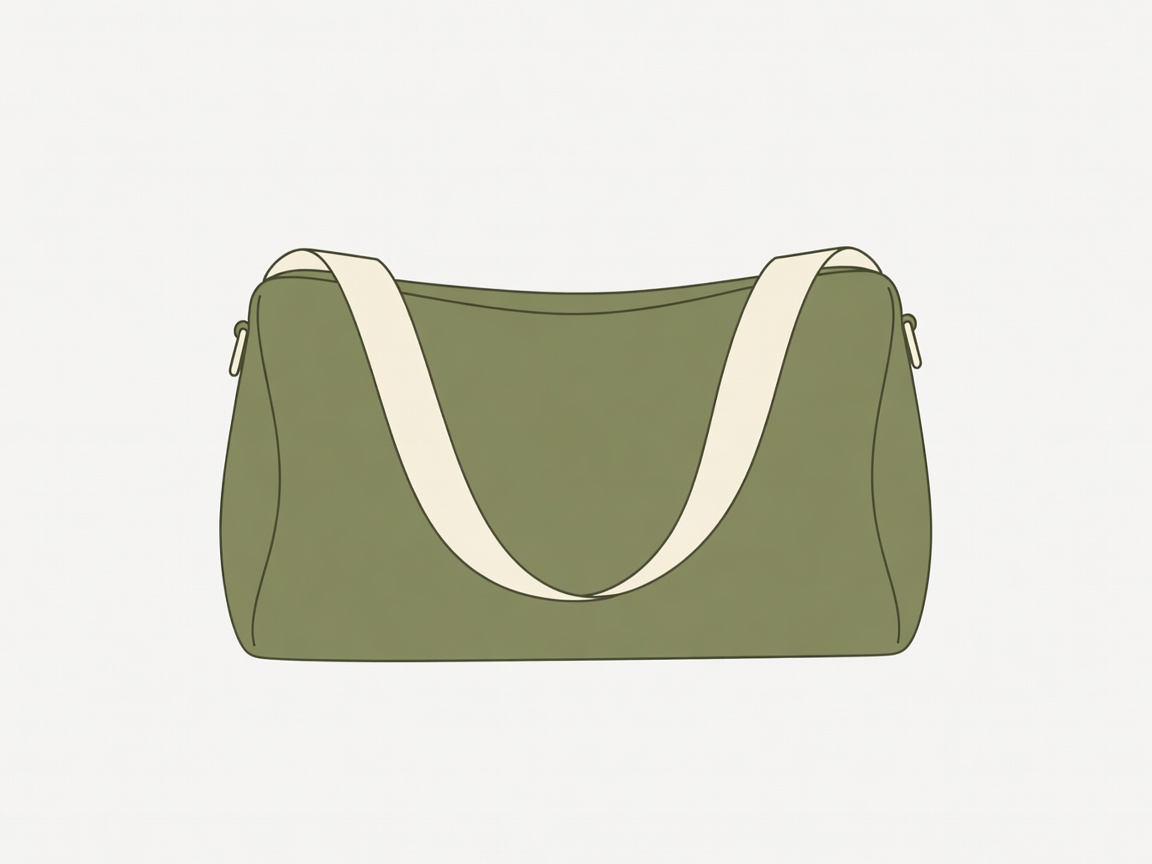
The case for a little squish
Overhead bins are rarely the neat rectangles the airline brochure suggests. They have lips, curves and the elbow of the last passenger's coat. A soft bag adapts: it slides in sideways, compresses against a bulkhead and flattens when you ask politely. That is why many seasoned travellers who fly several airlines a year end up with a duffel or a clamshell pack as their default.
It is also easier to live with off the plane. A duffel opens wide on a hotel bed, folds nearly flat in a wardrobe and gets carried up a station staircase on your shoulder without a single bump. If your short trips involve cobbled lanes, ferries or trains without lifts, the missing wheels start to look like a feature.
Fabrics worth knowing
Look at the fabric before the colour. Ballistic nylon and Cordura-type nylon resist abrasion and have kept bags like Briggs & Riley's soft collections respectable for decades. Ripstop recycled polyester with a weatherproof coating, as used by Patagonia in its Black Hole range, stays light and sheds rain. Waxed canvas looks wonderful and wears in handsomely, but it is heavier and wants occasional care.
Remember that “water-resistant” means a shower, not a storm. If the forecast is grim, put electronics in a small dry sack. Check the zips too; YKK on the pulls is a good sign, and a lockable double-zip head means you can clip it shut at the airport.
Duffel, backpack or hybrid
A top-loading duffel is the simplest thing in travel, and also the one where you dig for your socks. A clamshell backpack such as the Osprey Farpoint 40 opens like a suitcase and stows its harness behind a panel. The Peak Design Travel Duffelpack 35L takes the hybrid idea further, with straps that tuck away or come out as needed. For most airlines, 35 to 40 litres is the usual sweet spot for the larger cabin allowance, though the shape matters as much as the number.
If you carry your bag more than you roll it, choose a pack with a padded hip belt or a duffel with a properly padded shoulder strap. Your back will remember the difference at the end of a long terminal walk.
The soft-bag checklist
- Choose 35–40 litres for a larger cabin bag, and go smaller for under-seat rules.
- Look for a padded base panel so the bag keeps some shape on the floor.
- Test the strap or harness with a full load, not an empty bag.
- Prefer internal compression straps so the bag can shrink to fit a sizer.
- Check that the main zip opens wide enough to pack without a wrestling match.
- Add a few packing cubes to keep the inside tidy.
- Measure the bag when packed and compare it with your airline's limits.